What is Equilitri

Equilitri is the simplest and the most complete personal development method. We make it available for individuals or companies as a complete training & coaching package – The Equilitri Journey.
Equilitri is a journey to discover yourself, who you are and who you can be. For teams, the main benefits are increasing motivation, achieving work-life balance, goal-setting.
It has been developed in over 15 years of research and testing in Asia and Europe. It has created success stories and successful projects and it is promoted by an international team located in 9 countries.
Why should I choose it?
The Equilitri Journey is a complete personal development package designed to help you find your balance, your direction in life, motivation to pursue your dreams, solutions for challenges or other answers that you might be looking for.
There are two packages that are available in 9 countries in Europe:
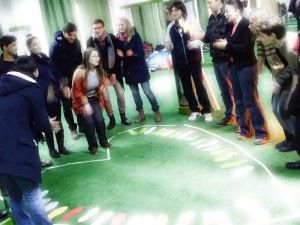 Equilitri Journey for your Company or Organisation |
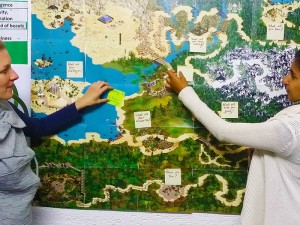 Equilitri Journey for YOU! |
How does it work?
Most people believe that in order to achieve success, we must follow success stories. Although that idea has merit, the problem with it is that everybody is different. Just because one person went from rags to riches after a life full of hard work and hardship does not mean that it will work for you.
The idea behind those success stories is that there were personality traits that those people had which you might not, socio-economic context which might be different, opportunities and challenges which are always different.
One other major factor that is surely different is something that we call emotional drive. It consists of desires, motivations, personal experiences and other motivational factors.
Success and Happiness are two different things. While success may appear to be the same, what might make one happy will be different from what will make you happy.
The bottom line is that if any given success system is not working for you personally, you need to find your own. Equilitri allows you to do just that. Equilitri is not a success recipe, it offers you a set of tools to build your own success & happiness recipe.
Most Personal Development methods leave you dependent on tools, books, courses, coaches, guides that you sometimes need to purchase as well. Equilitri is pretty much self-manageable.
The Story of Equilitri
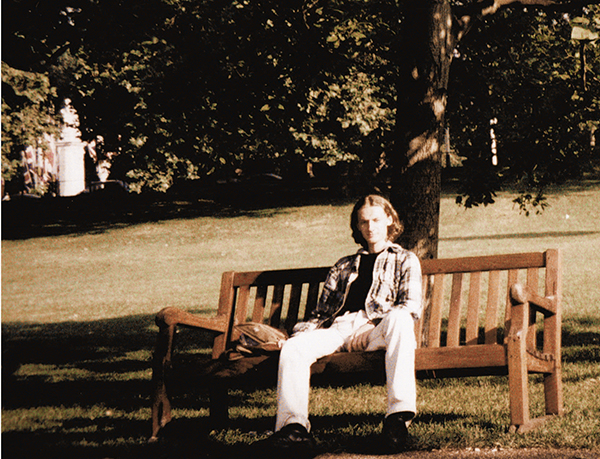 Equilitri started a very long time ago, in 1997, when a young and very lost student was trying to find his purpose in life and his path in society. It started as a personal project, a bet with life itself, against many odds. It must sound very familiar to you, as this is an experience most of us go through and many fail.
This young start dreamt of “impossible” things like travelling all around the world, although he couldn’t figure out where to get the money for the next meal, getting a good job, even though the first 100 applications were rejected, learning to play guitar, albeit for 2 years friends made fun of his horrible jangling, finding a nice looking girl, despite his unfortunate look and so on.
Many people around him advised “realism” or made fun. He thought that there must be a way and started looking for it. He failed a few times before realizing that, besides will, you need tools. The ones he found were either overly complex, or prohibitively expensive or required an expert to guide you through. So he decided to create new ones, looking for simplicity and equilibrium.
This was the first phase of this Journey, and took a few years of trial and error. The first set of tools was finished in 2001, in England. For this young man, it resulted in a 9-year plan to turn all those “impossible” dreams into reality.
Can you reach your dreams in spite of lacking the means for it? By 1999 the Journey had started with coincidentally the dream of travelling and studying. Against all odds, he obtained a scholarship abroad. However, it took only one day to learn that the £12 he planned for food for the entire month (almost double the amount he used to spend in Romania) were just enough for a big burger with fries. Then, during the first week he realised that while he thought he spoke decent English, he was close to useless in the seminars and classes where the impossible-to-understand British accent combined with Latin and legal terminology turned English into Klingon language.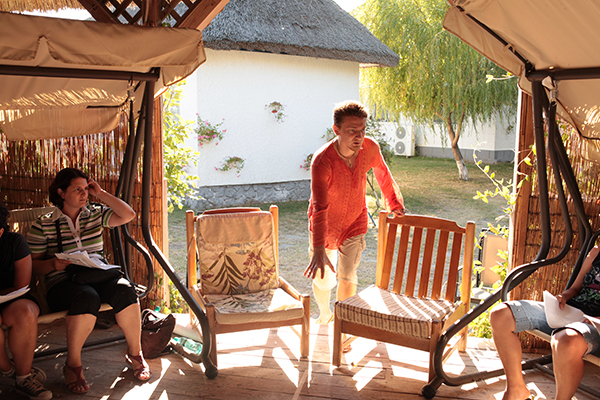
Where there’s a will, there’s a way. With careful planning and the tools he trusted, he managed to get through this. And things went from good to better. Another scholarship followed, even a first job and soon he realised he had been through 6 Universities and Institutes in 5 countries. It wasn’t very long before other people started to ask him for advice.
For ten years, Equilitri meant extensive trial and error processes, sharing Equilitri tools with others and asking what was their experience with them. Little by little the idea that these tools should not be kept for the use of a single person took shape.
In 2010 a 9-year plan was developed to move Equilitri from personal to professional.
The first Equilitri training course started pretty much as a “garage” enterprise, in one small apartment in Bucharest, within an NGO established by the author, with a young and motivated team and for this very team. The name of the NGO is C.A.D.D.R.U., an acronym for the Assistance Centre for the Sustainable Development of Human Resources
The team was composed of Alina Posirca, Silvia Ghioc, Dragos Codreanu, Alex Done.
Out of lack of funds and thanks to nice weather, the training took place outdoors, in one of the parks of Bucharest.
The word spread out at fairs, courses and other projects that the team undertook. People showed a lot of interest in the topic, which prompted further initiatives and eventually the Life-Path Asia projects. It was designed to help the personal development of students in the final year of University.
Their work started with a group of experts in various training related areas (Darko Sarakinov, Arun Kumar, Vishal Singh) within the training division of FCS Software, MTS, New Delhi, developing elements that were later used in Equilitri. Visits and pieces of training took place in universities in northern India in Dehradoon, Ghaziabad, Ambala, Rorkee.
The work continued under the auspices of Living Wisdom Foundation, where the first Equilitri full training was developed: Life-Path, which was to be co-trained with Dr. S.S. Kulkarni, president of LWF and a local management guru.
Why India? for several reasons. By this time contracts and projects were so many that time to sit down and write for several months was an impossible dream. 6 months away from everything were a must. India happens to be “very” away from everything.
Also, building a set of tools that was tested only by people in Europe does not sound right. And third, 9 years ago the author promised himself to go to Asia for 6 months. It all fits together.
Le Refuge was a project from the Life-Path series where the focus was on Business Coaching and was part of a project of several organisations from Romania and France.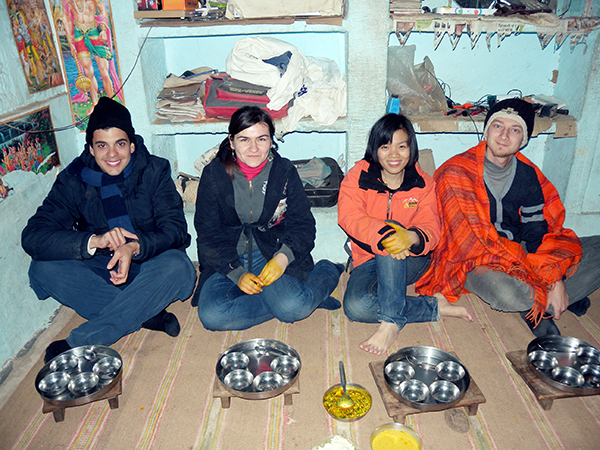
Le Refuge is an actual refuge in the middle of the Cambodian lostlands for 180 children affected by the Khmer Rouge regime with no access to education, health and other services. It is run by two very dedicated men, Saran and Somet who suffered dramatically during the regime, with their entire families brutally murdered and half a life-time of political refuge.
The focus was to offer them tools to develop their dream of helping these children and develop Le Refuge.
The organizing team included Saran Meas (KH), Iuliana Dinu (RO), Frederic Rossi (FR).
LifePath Viet-Nam followed, taking place in February-March 2011 in HaNoi, Viet-Nam. It was designed to help in the personal and professional development of the employees of Raffles Hanoi.
Raffles International is the largest private education group in Asia-Pacific (4 universities and 33 colleges across 13 countries).
The project was hosted and supported by Raffles Hanoi and marked the transition to the corporate environment and focusing on professional development as part of personal development. Equilitri had a great impact on the team, being the first ever training in which they participated, where elements of non-formal education have been used.
Credits and thanks should go to the organizers of this course, Alex Quah Ban Thong, Lena Bucatariu and Nguyen Lan Huong
Later on, projects multiplied on an incredible scale, based on a 9-year strategy. The second phase of this strategy is called “The European Training Wave” and aims to promote the method in Europe. It included multiple trainings and workshops in Romania, Lithuania, Turkey, Portugal, Macedonia, with more to follow.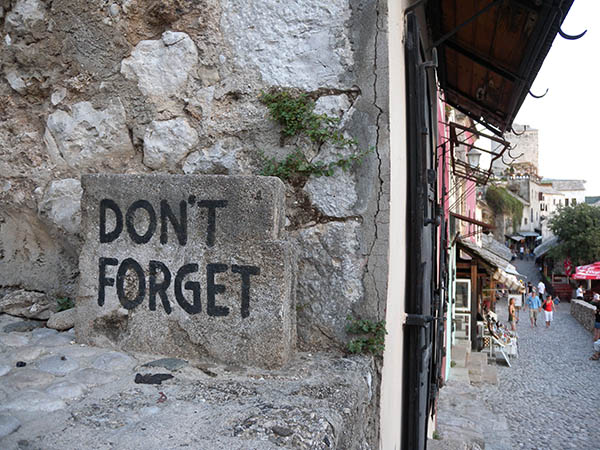
… and the Journey goes on